

Why Diamond Fluorescence Matters More Than Most Buyers Realise
12 June 2026
When buying a diamond, most people focus on the famous 4Cs — cut, colour, clarity, and carat weight. While these factors are essential, another characteristic can significantly influence a diamond's appearance and value: diamond fluorescence.
Often misunderstood and frequently overlooked, fluorescence can affect how a diamond looks under different lighting conditions and may even present an opportunity to secure exceptional value. Understanding fluorescence in diamonds can help buyers make more informed decisions and choose a stone that offers both beauty and confidence.
What Is Diamond Fluorescence?
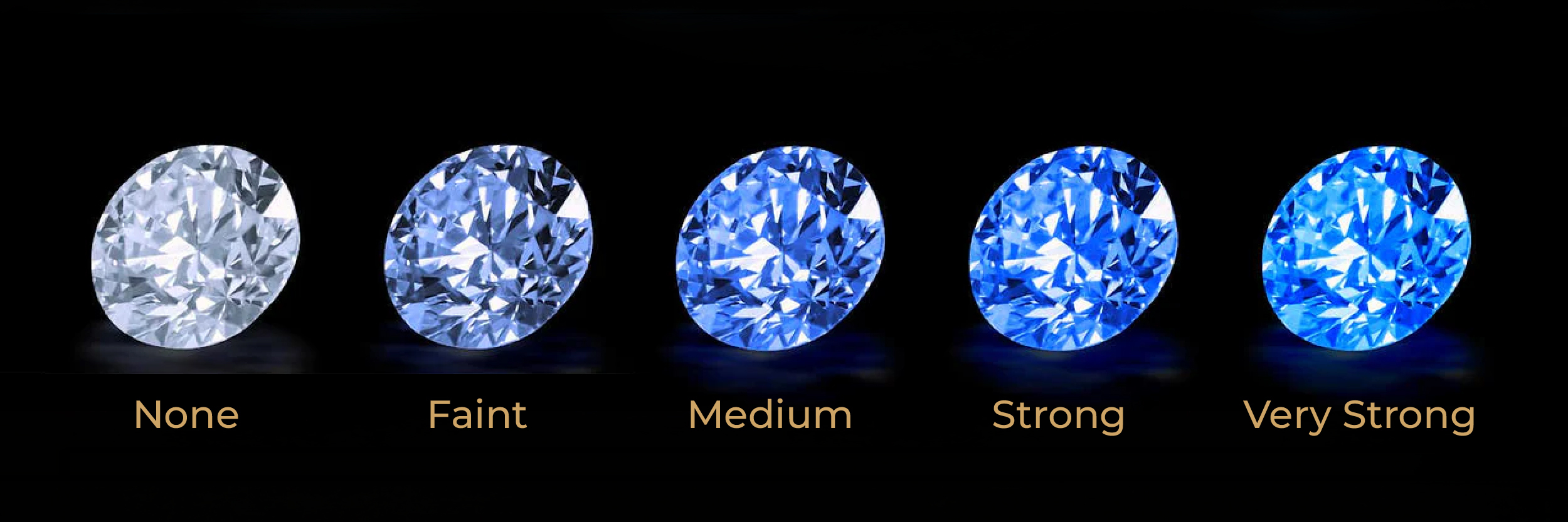
Diamond fluorescence is a natural phenomenon in which a diamond emits a visible glow when exposed to ultraviolet (UV) light. In most cases, this glow appears blue, although yellow, white, green, and orange fluorescence can occasionally occur.
This effect is caused by trace elements within the diamond's crystal structure and is entirely natural. Fluorescence is not a flaw, defect, or indication of poor quality. In fact, many natural diamonds display some degree of fluorescence.
Gemmological studies estimate that approximately 25–35% of diamonds exhibit fluorescence at varying intensity levels.
How Is Fluorescence Graded?
As part of professional diamond grading, fluorescence is typically classified into five categories:
- None
- Faint
- Medium
- Strong
- Very Strong
These grades measure the intensity of the fluorescence reaction under UV light rather than its visibility during everyday wear.
Most diamonds with faint or medium fluorescence show little or no noticeable difference under normal lighting conditions.
How Fluorescence Affects a Diamond's Appearance
The impact of fluorescence in diamonds depends on the individual stone and its colour grade.
Potential Benefits
Blue fluorescence can sometimes improve the appearance of diamonds with slight yellow undertones. In near-colourless diamonds, particularly those graded H, I, J, and occasionally K, fluorescence may help the stone appear whiter and brighter.
This subtle effect can enhance visual appeal while allowing buyers to select a lower colour grade without compromising beauty.
Potential Drawbacks
In a small percentage of diamonds with strong or very strong fluorescence, the stone may appear slightly hazy, milky, or oily under certain lighting conditions.
However, this effect is relatively uncommon and should be assessed on a case-by-case basis. Many fluorescent diamonds display excellent transparency and brilliance.
Fluorescence and Diamond Colour Grades
The relationship between fluorescence and colour is one of the most important considerations when evaluating a diamond.
|
Diamond Colour Grade |
Impact of Blue Fluorescence |
|
D–F (Colourless) |
Usually little to no visual benefit |
|
G–H (Near Colourless) |
Typically neutral impact |
|
I–J (Near Colourless) |
May improve perceived whiteness |
|
K and Below |
Can help reduce visible yellow tint |
For this reason, some experienced buyers actively seek diamonds with medium blue fluorescence in the near-colourless range, as they can offer an attractive balance between appearance and value.
Can Fluorescence Save You Money?
One of the lesser-known advantages of diamond fluorescence is its potential impact on pricing.
Historically, fluorescent diamonds have sometimes been viewed with caution within the market. As a result, diamonds with medium or strong fluorescence may be priced lower than comparable non-fluorescent stones.
For knowledgeable buyers, this can create an opportunity to secure a beautiful diamond at a more competitive price.
A Practical Example
Imagine two diamonds with identical cut, clarity, colour, and carat weight. The only difference is that one has medium blue fluorescence.
If the fluorescent diamond shows no haziness and appears equally brilliant, it may be available at a lower price than the non-fluorescent option. In such cases, buyers can enjoy exceptional value without sacrificing visual appeal.
Does Fluorescence Affect Diamond Quality?
A common misconception is that fluorescence automatically lowers diamond quality. This is not true.
Fluorescence is simply one characteristic recorded during the diamond grading process. Reputable grading laboratories evaluate diamonds using multiple factors, including:
- Cut
- Colour
- Clarity
- Carat weight
- Symmetry
- Polish
- Proportions
- Fluorescence
A diamond's colour or clarity grade is not reduced solely because it exhibits fluorescence.
Instead, fluorescence is listed separately so buyers can assess its significance alongside all other quality factors.
Should You Buy a Fluorescent Diamond?
The answer depends on the individual diamond rather than the fluorescence grade alone.
Fluorescence May Be a Good Choice If:
- You want the best possible value.
- You are considering a near-colourless diamond.
- The stone has been evaluated and shows excellent transparency.
- You appreciate unique natural characteristics.
Consider Additional Evaluation If:
- The diamond has strong or very strong fluorescence.
- You are purchasing a D–F colourless diamond.
- The stone appears milky or hazy.
- Detailed imagery or professional guidance is unavailable.
Why Certification Matters
When purchasing any diamond, certification is essential.
Independent grading reports provide objective information about fluorescence and other quality characteristics, helping buyers make informed decisions.
A certified diamond offers greater transparency regarding grading standards, authenticity, and overall value.
Rather than focusing on a single factor, buyers should assess fluorescence within the broader context of the diamond's complete grading profile.
Final Thoughts
Diamond fluorescence is one of the most misunderstood characteristics in the diamond industry. While some buyers automatically avoid fluorescent diamonds, the reality is far more nuanced.
In many cases, fluorescence in diamonds has little or no negative impact on appearance and may even enhance the perceived whiteness of certain stones. More importantly, it can provide valuable pricing opportunities for informed buyers.
Rather than dismissing fluorescence outright, buyers should evaluate each diamond individually. A well-cut, beautifully graded diamond with medium blue fluorescence may offer exceptional brilliance, impressive value, and outstanding overall diamond quality.
By understanding how fluorescence fits into the broader process of diamond grading, buyers can make more confident decisions and discover remarkable diamonds that others may overlook.
FAQs
1. What is diamond fluorescence?
Diamond fluorescence is a natural reaction that causes some diamonds to emit a visible glow when exposed to ultraviolet (UV) light. The most common fluorescence colour is blue, although other colours can occasionally occur.
2. Does diamond fluorescence affect a diamond's value?
Yes, it can. Diamonds with medium to strong fluorescence are sometimes priced lower than comparable non-fluorescent diamonds. This can create excellent value opportunities for buyers when the fluorescence has no negative impact on appearance.
3. Is fluorescence in diamonds good or bad?
Fluorescence is neither inherently good nor bad. In some near-colourless diamonds, blue fluorescence can make the stone appear whiter. However, in rare cases, very strong fluorescence may cause a slightly hazy or milky appearance.
4. Does diamond fluorescence reduce diamond quality?
No. Fluorescence does not automatically reduce diamond quality. It is simply one characteristic recorded during the diamond grading process and is evaluated separately from cut, colour, clarity, and carat weight.
5. Should I buy a diamond with fluorescence?
A diamond with fluorescence can be an excellent choice if it has been properly evaluated and shows strong brilliance and transparency. Many buyers choose fluorescent diamonds because they often offer better value without compromising beauty.
6. How is diamond fluorescence graded?
Diamond grading laboratories typically classify fluorescence as None, Faint, Medium, Strong, or Very Strong. These grades indicate the intensity of the fluorescence under UV light.
7. Which diamond colour grades benefit most from fluorescence?
Diamonds in the H, I, and J colour ranges often benefit the most from medium blue fluorescence because it can help the stone appear whiter and reduce the visibility of slight yellow undertones.
About the Author
Saurabh Chachiya
SEO, AI & Digital Growth Specialist
Saurabh Chachiya specialises in SEO, AEO, GEO, and content strategy. At DiamondXE, he writes about diamonds, jewellery trends, and the evolving digital landscape of the jewellery industry.
Recent post
Share
Like us on facebook

Saurabh Chachiya is an SEO, AI and performance marketing specialist with 5+ years of experience in driving organic growth, improving search visibility and generating qualified leads. I specialise in technical SEO, on-page optimisation and AI-driven search strategies, including AEO and GEO.
My expertise also extends to the luxury jewellery industry, where I specialise in building premium brand visibility, improving organic discovery, and creating high-converting digital growth strategies for modern jewellery brands.”
I have successfully scaled websites to 35K+ users, achieved 80%+ keywords on Google Page 1, and increased search impressions to 450K+, delivering consistent, data-driven results across industries.
YOU MAY ALSO LIKE
What Makes a Diamond Valuable? Understanding the 5 Factors Beyond the 4Cs
5 June 2026
Discover the key factors beyond the 4Cs that influence diamond value and worth.
What Is a Diamond Inventory API? Complete Guide for Jewellers, Resellers & Suppliers (2026)
26 May 2026
Complete guide to Diamond Inventory APIs for modern jewellers and dealers.
Beyond Sparkle: Why Modern Buyers Choose Natural Diamonds That Tell a Story
12 May 2026
Discover timeless natural diamond jewellery crafted for modern elegance, meaningful moments, and everyday luxury with DiamondXE.
DiamondXE © 2026. All Rights Reserved.

This website uses cookies to ensure you get the best experience on our website. Cookies Policy